Welcome to SERES MECH >
Welcome to SERES MECH >
In the beverage industry, cup lids play an important role in ensuring convenience, hygiene, and product safety. Whether it’s a hot coffee or a cold smoothie, the right lid prevents spills and enhances the drinking experience. As consumer needs and environmental awareness continue to grow, different materials have been developed to meet various applications. Let’s explore the most common cup lid materials—from traditional plastics to modern eco-friendly options.
Among all types of plastic cup lids, Polystyrene (PS) lids are the most common and widely used, especially for disposable coffee cups. PS is a recyclable plastic material known for its smooth texture and affordability.
There are several types of PS lids. Pop open lids have a small flip cover over the drinking hole to prevent spills during transport. When lifted, the cover can also serve as a straw hole, making it ideal for takeout drinks. Flat lids share a similar design but have no cover on the drink hole; instead, they feature a small, narrow opening—about 5mm wide—to prevent accidental spillage. Another variation, tearable lids, are low-profile and best suited for smaller cups.
PS lids are lightweight, inexpensive, and can match almost any paper cup design, making them a practical option for coffee shops and fast-food outlets. However, compared to other materials, they are less heat-resistant.
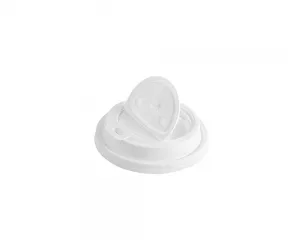
Next, we have Polypropylene (PP) lids, which are often preferred for their durability and versatility. PP is harder and more heat-resistant than PS, giving the lids a more solid feel. These lids are commonly produced through injection molding and are suitable for both hot and cold beverages.
A typical example is the straw lid, which features a small cross slit in the middle for straw insertion. The lid’s structure ensures that the drink stays inside even if the cup is shaken. PP cup lids are usually paired with PP plastic cups, but they also fit paper cups, especially for cold drinks such as iced coffee and smoothies.
While PP lids offer superior durability, they have a lower recycling rate compared to PET. Additionally, their production and degradation can release microplastics into the environment, which is a concern for sustainability-focused brands.
Polyethylene Terephthalate (PET) lids are another major category, commonly used for cold drink cups and PET plastic cups. Their crystal-clear transparency makes them visually appealing and perfect for showcasing drinks with cream toppings or colorful layers.
There are three main types of PET lids: flat lids, dome lids, and streamless lids. Flat lids have a cross-shaped straw hole in the center, while dome lids are higher and shaped like a bubble, allowing space for whipped cream or ice cream toppings. Streamless lids, on the other hand, feature a small drinking hole and a taller structure to prevent spills.
PET lids are lightweight, affordable, and have the highest recycling rate among plastic products. Because of these advantages, they are widely used in beverage chains, juice shops, and fast-food outlets around the world.
With the growing global emphasis on sustainability, paper cup lids are becoming increasingly popular. These lids are typically made from coated paper—either PE or PLA—to make them water- and heat-resistant. Structurally, they are similar to paper cups, making them an environmentally friendly choice.
Paper lids are available in two common styles. Flat paper lids are simple, thin, and about 5mm high, with a small drinking hole near the edge. High paper lids, however, have a two-layer structure resembling a small dome, with a height of around 4cm. This design not only prevents spills but also adds a touch of style to the overall cup appearance.
Because they are made from renewable materials and can be composted or recycled, paper lids align well with brands that promote green initiatives. They have become the preferred option in coffee chains and eco-conscious cafés.
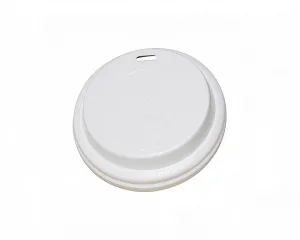
Another material leading the eco-friendly movement is bagasse, a natural byproduct of sugarcane processing. Bagasse lids are made from sugarcane fiber and are completely biodegradable within 30–90 days under natural conditions. Unlike plastics, they release no harmful substances during degradation.
Bagasse lids not only support environmental sustainability but also offer a premium texture and sturdy structure. Their natural matte finish provides a more elegant and organic look compared to plastic lids. Because they are made from renewable and recycled agricultural waste, they are an ideal choice for businesses aiming to reduce their environmental impact while maintaining a high-end image.
When selecting disposable cup lids, it’s essential to consider several factors—such as beverage type, temperature, material compatibility, and sustainability goals.
The right lid not only protects the drink but also enhances the overall brand experience. As the market shifts toward greener materials, businesses that adopt eco-friendly cup lids early will gain a competitive edge.
From traditional PS and PP lids to biodegradable paper and bagasse lids, the evolution of cup lid materials reflects the packaging industry’s response to changing environmental and consumer demands. The trend is clear—brands are moving away from single-use plastics and embracing sustainable materials that balance performance and responsibility.
For businesses seeking to upgrade their packaging solutions, choosing a reliable partner is key.
SERESMECH, with 20 years of experience in the packaging industry, provides one-stop paper packaging production solutions for global customers. From cup and lid manufacturing equipment to raw materials and workshop design, SERESMECH helps businesses create high-quality, eco-friendly packaging that meets modern market standards.

Copyright © 2024 CIDIHUAKAI Supply Chain Management Co., Ltd., All rights reserved.
Designed by IWONDER


