Welcome to SERES MECH >
Welcome to SERES MECH >
In today’s food service industry, convenience and sustainability go hand in hand. As more consumers and businesses seek eco-friendly alternatives to plastic, paper takeout boxes have become a preferred choice. Behind this shift is a critical piece of technology: the paper box making machine. These machines are at the heart of modern food packaging, enabling fast, efficient, and sustainable production of disposable containers. Understanding how they work and what to look for can help manufacturers make smart investments that support both business growth and environmental responsibility.
Before choosing a machine, it’s important to understand the different types available. Paper box making machines vary in how they form boxes, their production speed, material compatibility, and sealing methods. For example, some machines use folding techniques to create clamshell containers, while others apply pressure to shape deep-draw food trays. The forming mechanism directly affects the type of box produced and its suitability for specific foods.
Speed is another key differentiator. Basic models may produce a few hundred boxes per hour, while high-end automatic machines can exceed thousands per hour. This makes them ideal for large-scale operations like food chains or packaging suppliers. Additionally, machines must be compatible with various paper types, such as kraft, coated, or recycled paper. Finally, sealing technologies—like hot melt glue or cold adhesive—ensure the box stays closed during transport. Knowing these categories helps businesses match the right machine to their needs.
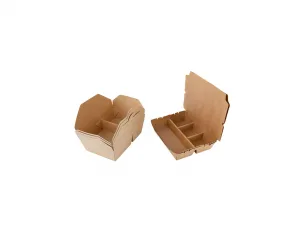
When investing in a paper box machine, several features should guide your decision. The first is automation level. Fully automatic machines handle every step—from feeding paper to folding and gluing—without manual intervention. This reduces labor costs and increases consistency. For instance, a fully automatic cardboard box making machine can run continuously with minimal supervision, making it perfect for high-volume production.
Size and capacity are also crucial. If your business produces thousands of boxes daily, you’ll need a high-capacity model. These are often larger and more powerful, designed for industrial environments. On the other hand, smaller machines suit startups or restaurants producing in-house. They take up less space and require less upfront investment, making them accessible for limited budgets.
Specialized capabilities can add even more value. Some machines come with built-in printing, slotting, or die-cutting functions. This integration streamlines production by eliminating the need for separate equipment. For example, a machine with digital printing can apply logos and branding directly during manufacturing, saving time and reducing handling errors. These features not only improve efficiency but also enhance product quality.
Not all paper box machines are created equal, and price often reflects functionality. Basic models start around 7,500andareidealforsmalloperations.Whileaffordable,theyofferlimitedautomationandsloweroutput.Mid−rangemachines,pricedbetween7,500andareidealforsmalloperations.Whileaffordable,theyofferlimitedautomationandsloweroutput.Mid−rangemachines,pricedbetween20,000 and $100,000, strike a balance between cost and performance. They often include semi-automatic features and better material handling, making them suitable for growing businesses.
At the high end, advanced machines can cost over $420,000. These are fully automated, high-speed systems used by large manufacturers. They offer precision control, minimal waste, and integration with factory-wide production lines. While the initial cost is high, the long-term return on investment comes from increased output, lower labor needs, and consistent quality. Choosing the right level depends on your production goals and budget.
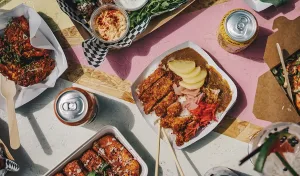
The versatility of paper packaging is evident in the wide range of box styles available. Foldable boxes are popular for noodles, rice, and stir-fries. Their flat design saves storage space and makes them easy to assemble. Clamshell containers, with their hinged lids, are perfect for sandwiches, salads, and pastries, offering a secure seal that prevents spills.
Soup cups are specially designed to hold liquids, featuring a leak-resistant lining and tight-fitting lids. Dessert boxes often have clear windows to showcase cakes and pastries, adding visual appeal. Pizza boxes use thicker paperboard to insulate and prevent sogginess, while hamburger boxes include grease-resistant coatings to keep buns intact. Compartmentalized meal boxes allow for portioned meals, making them ideal for healthy eating plans or bento-style packaging.
Many customers ask if paper takeout boxes are microwave-safe. The answer depends on the design and materials. Most foldable, clamshell, and compartmentalized boxes are safe to heat, as long as they don’t contain metal or plastic components. However, dessert boxes with decorative coatings or plastic windows should not be microwaved.
Other common questions include whether these boxes can be reused, recycled, or composted. In general, clean paper boxes can be reused for storage. Most are recyclable, though local rules may vary. Biodegradability depends on the lining—boxes with plastic coatings may not break down easily, while those with PLA (a plant-based coating) are compostable.
The production of paper takeout boxes begins with raw materials like kraft paper, coated paper, or recycled fiber. These are processed into sheets, then coated for moisture resistance. Next, printing machines apply branding, followed by die-cutting to shape the flat blanks.
Finally, paper box forming machines fold and glue the blanks into finished containers. This stage requires precision to ensure strong seals and proper structure. Once complete, the boxes are packaged and shipped. Each step relies on specialized equipment, with the paper box machine playing the central role in transforming flat paper into functional, sustainable packaging.

Copyright © 2024 CIDIHUAKAI Supply Chain Management Co., Ltd., All rights reserved.
Designed by IWONDER


