Welcome to SERES MECH >
Welcome to SERES MECH >
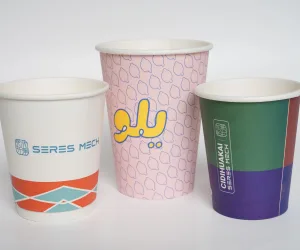
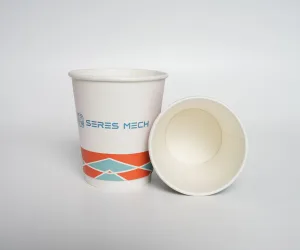
Water-based coatings are an environmentally friendly technology that uses water as a dispersion medium, replacing traditional solvent-based coatings. Their core advantages lie in low volatile organic compound (VOC) emissions, recyclability, and potential for biodegradation. In the field of disposable paper cups, water-based coatings are gradually replacing traditional plastic laminations, emerging as a key innovative solution to address white pollution. The following is a detailed analysis from the perspectives of technical characteristics, application scenarios, market status, and future trends:
Water-based coatings form a dense water-resistant layer on the paper surface through physical cross-linking or chemical reactions. Their core components include water-based resins (e.g., acrylic, polyurethane, polyester), bio-based materials (e.g., PHA – polyhydroxyalkanoate), and functional additives (e.g., water repellents, dispersants). Unlike traditional PE (polyethylene) laminations, water-based coatings bond with paper fibers via intermolecular forces rather than melt lamination, making them easier to separate from pulp during the recycling process.
| Performance Indicators | Water-based Coating | PE Lamination | PLA Lamination |
| Temperature Resistance Range | -10℃ ~ 100℃ | -20℃ ~ 80℃ | -10℃ ~ 60℃ |
| Water Resistance | Excellent (resistant to long-term immersion) | Excellent | Good |
| Oil Resistance | Excellent (oil-impermeable) | Good | Fair |
| Recyclability | 100% repulpable | Non-recyclable | Non-recyclable |
| Degradability | Fully degradable in all environments | Non-degradable | Industrially compostable |
Policy Promotion: China’s Action Plan for the Control of New Pollutants clearly restricts fluoride-containing coatings; the EU’s Packaging and Packaging Waste Directive requires all packaging to be recyclable by 2030, accelerating the replacement process of water-based coatings.
Technological Breakthroughs:
Self-Healing Coatings: The introduction of nanomaterials such as graphene enables automatic repair of microcracks in the coating.
Functional Integration: The development of composite water-based coatings with both antibacterial (silver ion) and thermal insulation (aerogel) functions to expand application scenarios.
Verify Compliance: Prioritize products labeled with “for food contact”, “recyclable”, or “biodegradable”.
Adapt to Application Scenarios:
Water-based coatings are reshaping the technical pattern of the disposable paper cup industry with their environmental friendliness, functionality, and policy adaptability. In the short term, acrylic and polyurethane coatings will dominate the mid-to-low-end market; in the long term, bio-based coatings such as PHA are expected to become mainstream, especially against the backdrop of increasingly strict global plastic restriction policies. In the future, with the maturity of nanotechnology and continuous fermentation processes, water-based coatings will further reduce costs and improve performance, providing a systematic solution to address plastic pollution.

Copyright © 2024 CIDIHUAKAI Supply Chain Management Co., Ltd., All rights reserved.
Designed by IWONDER